Trending

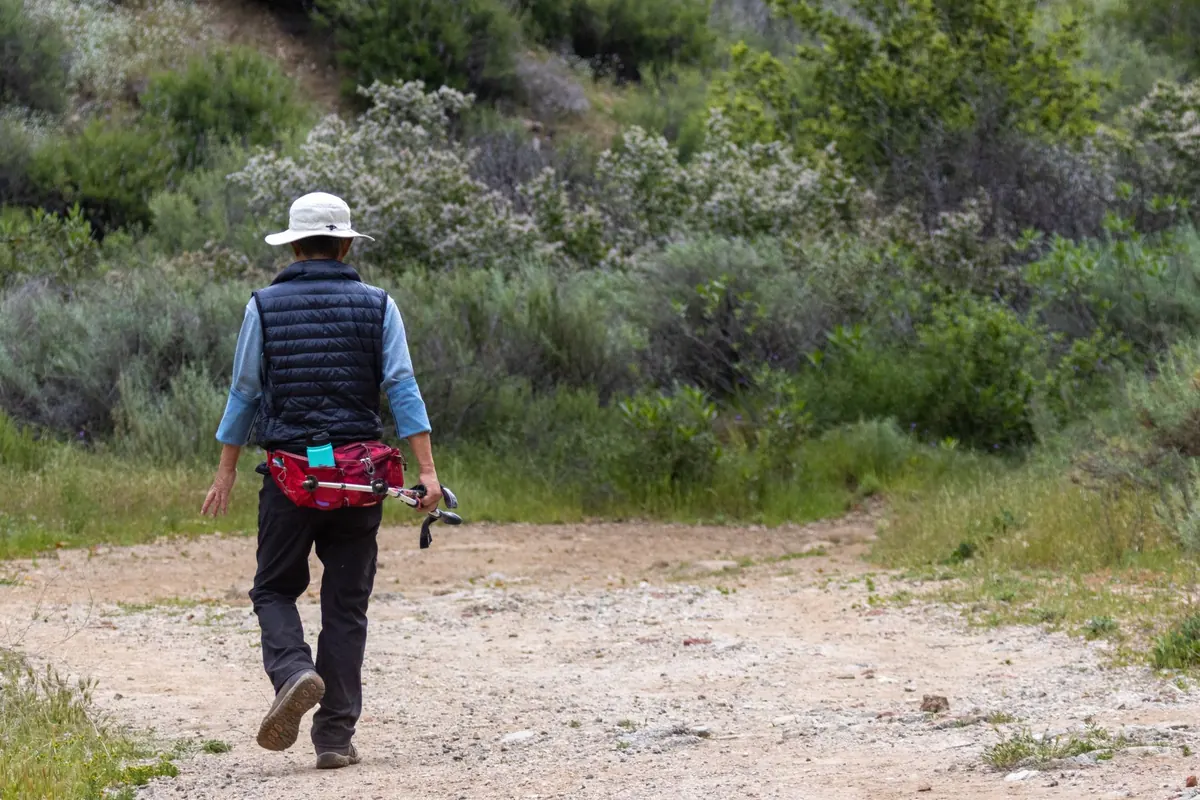
A solo day hike should feel like a small adventure, not a gamble. The difference is rarely courage. It is usually a quiet half-hour at the kitchen table, looking at the route with beginner’s honesty and asking whether you could still handle it if the weather turned, the path got rougher, or your phone died.
Use this checklist before you commit to a route. It is written for a beginner going alone, but the same questions work for any short hike where you are the only person making decisions. A good solo route is not the most impressive one on your list. It is the one with enough margin that a small mistake stays small.
Route descriptions can make a hike sound easier than it is. Before you read reviews or look at photos, find the basic numbers: distance, elevation gain, estimated time, surface, and exposure. Then compare them with what you have actually done recently, not what you hope to do. A flat five-mile walk and a five-mile walk with 1,500 feet of climbing are different days. A short trail can still be steep, rocky, or slow.
A useful test is to ask whether your longest recent walk is at least half of this route’s distance and climbing. If not, choose something smaller. There is no prize for making your first solo hike a sufferfest.
Read at least two sources, not just one blog post. Look for quiet warning words: scramble, exposed, unmaintained, river crossing, navigation required, steep drop-off, seasonal closure, or route-finding. These words do not automatically mean no, but they do mean the route deserves more attention. “Well marked” can mean painted blazes every few minutes, or it can mean a sign at the trailhead and nothing at the confusing junction.
Check recent conditions if you can. A trail that is simple in dry summer may be slippery, washed out, or hard to follow after heavy rain. A mountain route may hold snow into spring. A desert route may have no shade by mid-morning. If the only information is one old blog post and a photo of someone smiling at the summit, that is not enough for a first solo hike.
One red flag can sometimes be managed with preparation. Several together are a sign to choose a gentler route. Your first solo hike does not need to teach you every lesson at once.
Do not plan for your best day. Plan for a day when you slept badly, started later than expected, feel a little anxious, or the weather is worse than forecast. Solo hiking means you are the only person who can notice you are tired, decide to turn around, and keep yourself calm. That is easier on a route with short exits and clear signs.
Consider the shape of the route. An out-and-back lets you turn around at any time and retrace your steps. A loop can be lovely, but once you are halfway around, the shortest way out may be to keep going. A point-to-point route needs a shuttle or a pickup, which adds another thing that can go wrong. For a beginner alone, a simple out-and-back with a clear turnaround time is often the safest choice.
Check the forecast for the trailhead elevation, not just the nearest town. Mountains, canyons, and coastlines can have very different weather from the road below. Look at wind, rain, heat, snow, and afternoon storm risk. Then decide on a hard turnaround time. If you have not reached your chosen point by that time, you turn around anyway. This is not failure. It is the plan working.
A route that is easy in dry, calm conditions can become a different route in rain, wind, heat, or fading light.
Daylight matters as much as weather. A short winter day can turn a comfortable afternoon hike into a walk in the dark. Carry a headlamp even if you plan to be out early. If the route has a long exposed section with no shortcuts, give yourself more daylight margin than you think you need.
Do not rely on a phone alone. Download an offline map, but also carry a paper map or a printed route description and know how to read it. Check the route’s shape before you go: Is it a straight valley? Does it switchback? Are there side trails? What landmarks mark the turns? A phone battery can die in the cold, and a signal can vanish at the worst moment.
Tell someone your plan: where you are going, when you expect to start, when you expect to finish, and what to do if you do not check in. Give them a copy of the route if possible. At the trailhead, take a photo of the map board. It is a simple habit that gives you one more reference point.
Before you start, find the bailout options on the map. Is there a junction where you can cut back earlier? A road crossing? A shorter return? A safe place to wait out a storm? If the answer is “none,” treat the route as more serious than its distance suggests. Ask yourself where you would go if the weather changed at the halfway point. If you cannot answer clearly, pick a different route.
Route choice and preparation are connected. A route with no water source demands more water carried. A route with no shade demands an earlier start. A remote route demands extra food, a warm layer, a first-aid kit, a whistle, and a way to stay warm if you have to stop. Carry a little more than you think you need. The goal is not to be heavy; it is to have a margin for a slower day or a small problem.
At the trailhead, before you walk away from the car, run through a short final check. Conditions can change on the drive, and your body may feel different than you expected.
If any answer is no, adjust the plan. Choose the shorter option, wait, or go home. A changed plan is better than a forced one.
Choose a route you could walk out of calmly if you had to turn around early. That usually means well-marked trails, moderate distance, modest climbing, clear turnaround points, and weather you understand. It may not be the hike your social media feed rewards, but it is the kind of day that builds confidence instead of draining it.
The best first solo route is not the hardest one you can survive. It is the one you can manage well, with enough attention left over to enjoy being outside.
When you get home, spend five minutes reviewing the day. How long did the route actually take? Did you drink and eat enough? Were the junctions clear? Did the weather match the forecast? Did you feel anxious, tired, or rushed at any point? Write a few notes for next time. A route that felt challenging but manageable is a good sign. A route that felt like a near miss is useful information, not a failure. Over time, these notes become your own personal checklist for choosing safe, enjoyable solo day hikes.
Photo: David Brown / Pexels