Trending

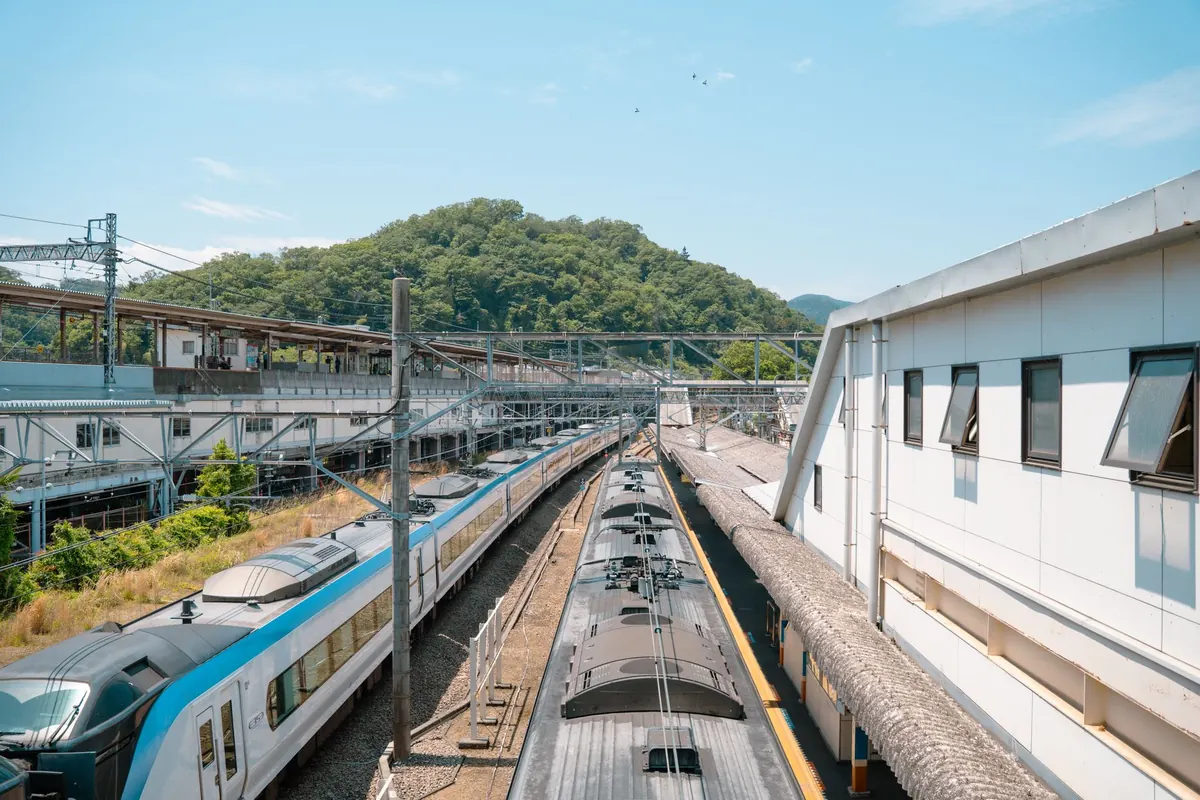
Ten days in Japan is generous time and a deceptively tricky amount of it to plan. Add too many stops and you spend the trip watching platforms slide past; add too few and you fly home wondering what the rest of the country looked like. The answer isn't a longer sightseeing list. It's a structure: two or three well-chosen bases, rail routes that connect them without backtracking, and a couple of days you haven't filled in yet. That's the version you can change your mind about on day four — which is usually when the best ideas turn up.
A base is a hotel you keep for two or three nights while day trips radiate out from it. Every time you change hotels you lose half a day to checkout, transit, and the small misery of repacking, so on a ten-day trip three bases is a comfortable ceiling. Two works beautifully if you want a slower pace.
The classic spine is Tokyo plus Kyoto or Osaka, with one third stop that suits your interests. Tokyo rewards three nights easily: markets, neighbourhoods, a day out to Nikko or Kamakura. Kyoto and Osaka sit close enough that you can sleep in one and eat in the other — Kyoto to Osaka is a short local train ride, and Nara is about 45 minutes from Kyoto, Uji around 20. Himeji Castle is under an hour from either city by shinkansen, which makes it a superb half-day addition.
For a third base, think about the shape of the country rather than the list of attractions. Kanazawa is two and a half to three hours from Tokyo on the Hokuriku Shinkansen and roughly the same from Kyoto (Thunderbird to Tsuruga, then shinkansen), and it gives you gardens, seafood markets, and a taste of the Sea of Japan coast. Hiroshima, about an hour and forty minutes from Kyoto, pairs well with Miyajima. Fukuoka, Sendai, and the Japan Alps are all viable too — just be honest about the travel time you're buying.
The national Japan Rail Pass is the famous one, and it's still useful, but it stopped being an automatic bargain when its price rose sharply in 2023. Do the arithmetic before you buy. A ten-day trip that uses the pass for two long shinkansen hops and otherwise stays inside one city often comes out cheaper with point-to-point tickets plus an IC card for local trains.
Japan is covered by a patchwork of regional passes — JR East's Tohoku and Niigata passes, JR West's Kansai Area and Kansai Wide Area passes, the Hokuriku Arch Pass, several Kyushu passes. They're cheaper, valid for shorter stretches, and often fit a two-base trip far better than the national version. Check the coverage map carefully: a pass that stops one station short of your destination is an expensive mistake.
Two practical notes. First, the national pass doesn't cover the fastest Nozomi and Mizuho services unless you pay a supplement, so you'll ride Hikari, Sakura, or Kodama instead — usually fifteen to thirty minutes slower, rarely a problem. Second, it also doesn't cover private railways such as Odakyu (so Hakone is out), Kintetsu, or the Tokyo Metro. That's what the IC card in your phone wallet is for.
This is a template, not a prescription. It flies into Tokyo and out of Osaka, which avoids a wasted return journey.
If Hiroshima matters more to you than Kanazawa, swap it in: Tokyo, then Kyoto, then two nights in Hiroshima, back to Osaka for the flight. The skeleton holds; only the middle changes.
Build one unclaimed day into the middle of the trip and one soft morning at the end. Weather in Japan is not merely a background detail — a rainy day flattens a mountain hike, and cloud can hide Mount Fuji entirely for a week. A buffer day converts a ruined plan into a pleasant alternative instead of a wasted ticket.
It also protects you from your own optimism. Trains run late, feet get sore, and someone in your group will want a second afternoon in a neighbourhood you stumbled into. On a buffer day in Kyoto, go to Fushimi Inari before eight in the morning and you'll have the lower gates almost to yourself. In Tokyo, ride out to a district you hadn't planned on. And keep the last night near your departure airport rather than attempting a heroic cross-country dash with luggage.
Reserve shinkansen seats on the ticket machines at major stations once you've activated your pass — it's free, quick, and the machines have English menus. Do it a day ahead in cherry blossom season, Golden Week, Obon, or around New Year, when the popular trains genuinely fill up.
If you're moving between cities with a suitcase, use luggage forwarding. Hotels and convenience stores arrange it, bags usually arrive the next day, and you travel with a daypack instead of a wheeled anchor. Bags with total dimensions over 160 cm need a reserved seat with the oversized luggage area on the Tokaido, Sanyo, and Kyushu shinkansen, so measure before you shop. For everything else, station coin lockers turn a transfer day into a sightseeing day.
Finally, keep your pass and reserved-seat tickets together and your IC card separate — mixing them up at a crowded gate is the most common way to lose five minutes and some dignity.
Write down your three bases and the exact train that links each pair. Add up the point-to-point fares, then compare that figure with the national pass and the relevant regional pass. Only then book hotels, choosing ones within a short walk of a station on a line you'll actually use. Leave one day blank, keep one morning free at the end, and pack a small bag you can carry comfortably. That's a ten-day trip with room to breathe — and room to change your mind, which is the whole point of travelling by train in Japan.
Photo: Iban Lopez Luna / Pexels