Trending

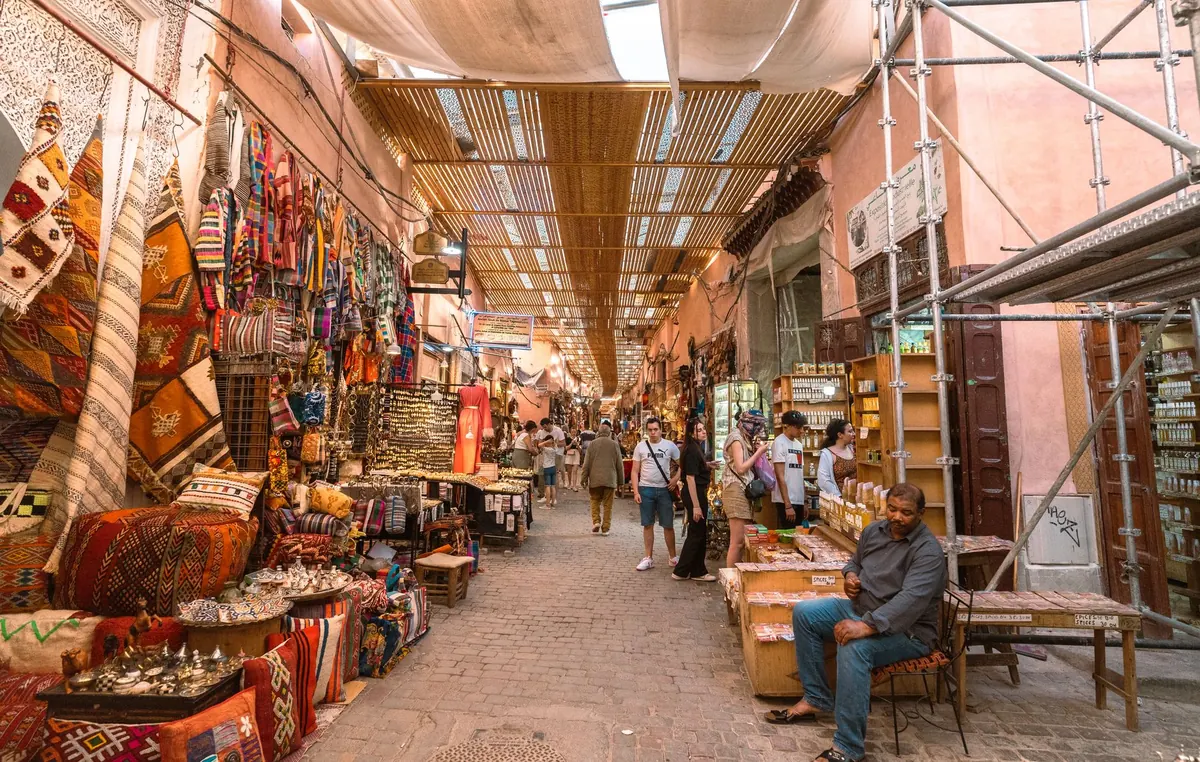
The medina looks, from the edge, like something you can conquer in an afternoon. A few gates, a main square, some alleys behind it. Then you walk in, the light drops, the lanes fork six ways, and the map on your phone spins in circles. That moment of confusion is normal, and it is part of the pleasure. What follows are the mistakes first-time visitors make most often inside the walls of Marrakech's old city, and the small adjustments that turn a stressful wander into a good day.
The medina was not planned on paper. It grew, which means lanes bend around old walls, dead-end at a courtyard door, and narrow to shoulder width before opening into a square selling nothing but lanterns. Treating it as a grid — "I'll take the third left, then the second right" — is where the first hour usually goes wrong.
Two habits fix most of this. First, get your bearings by landmarks rather than street names: the Koutoubia minaret is visible from a surprising number of spots, and the smell of the spice square or the sound of a café terrace makes a better anchor than an alley whose name you cannot pronounce. Second, download an offline map before you leave your riad, and accept that it will lose you underground in the covered souks. When it does, put the phone away, look up, and ask.
Asking is fine. Ask a shopkeeper, not someone who approaches you. Ask two people if the first answer seems vague. And when you get lost on purpose — which is half the point — keep walking in one general direction rather than turning constantly; you will hit a gate, a wall, or a landmark soon enough.
Somewhere in your first hour, a friendly man will fall into step beside you. He will tell you the street ahead is closed, or your riad has moved, or the tannery is only open today. He is not necessarily hostile, but he is often working, and the next thing you know you are in his cousin's shop with a carpet unrolled at your feet.
Three responses work better than being rude:
None of this requires suspicion of everyone. Marrakech is full of people who will genuinely point you the right way, walk you fifty metres to a corner, and wave you off. The test is simple: help that is offered and then dropped costs nothing. Help that comes with a destination attached is a negotiation.
Prices in the souks are a starting point, not an insult, and haggling is a conversation with rules. Two misreadings cause most of the friction. The first is treating the opening price as an outrage and replying with anger. The second is bargaining hard, winning, and then walking away.
Two further rules of courtesy. Do not handle an item, ask the price and start the ritual if you have no intention of buying it; that wastes the seller's morning. And do not compare prices loudly with the shop next door. Fixed prices exist too — pharmacies, most food, many modern shops — and haggling there just reads as confusion.
The medina is a place where people live, work and pray, and a camera is the fastest way to forget that. Photographing a shopkeeper mid-prayer, or a woman walking past at close range, is a bad trade: one image, a lot of bad feeling.
Ask. A gesture towards the camera and a questioning look is understood everywhere, and "no" is a complete answer. If you are invited into a workshop — a loom, a metal bench, a bakery — ask before photographing the work, and expect that some people will ask for a small payment for the privilege. That is their call to make. Also: step out of doorways rather than standing in them to check your phone, and never walk into a courtyard you have not been invited into. In a house, the door is a door.
Dress matters less than visitors expect and more than they would like. Covered shoulders and knees will not be commented on in tourist areas, but they make you more comfortable in residential lanes and in the shade of a courtyard. Keep a light shirt or scarf in your bag for the sun and for the moment a shopkeeper invites you to sit.
The medina is dense, hot and loud, and first-timers routinely plan four souks, a palace and a garden before lunch. Then the heat arrives, the mood frays, and a bargain turns into a quarrel. Slow down. Two districts, one long sit with mint tea, and a plan you are willing to abandon is a better shape for a day.
Start early, before the lanes fill and the heat builds. Pick one landmark as your anchor and one area to explore around it. Leave the phone in your pocket unless you are genuinely lost, and when you are, ask a shopkeeper. Say a friendly no to unsolicited guides, and a firm yes only once a price is agreed. Treat the first price in the souk as a greeting rather than a demand, decide your ceiling, and be willing to walk away with a smile. Photograph people
Photo: Uiliam Nörnberg / Pexels